



Originally published December 2023; updated July 2026.
Lab-grown diamonds generate a lot of very specific questions. Some of the most useful ones come up repeatedly on Reddit’s r/LabDiamonds community: Are they real diamonds? What do HPHT and CVD mean? Should you worry about strain or a colour tinge? And why can a diamond tester sometimes give a confusing result?
Here are straightforward answers from a jeweler’s point of view, updated to correct a few common misconceptions.
Are lab-grown diamonds real diamonds?
Yes. A lab-grown diamond is crystalline carbon with essentially the same chemical, optical and physical properties as a natural diamond. It is not cubic zirconia and it is not moissanite. The difference is origin: one grows in a controlled facility and the other forms in the earth.
A trained gemological laboratory can distinguish laboratory-grown and natural diamonds using specialized equipment. You generally cannot make that determination accurately by looking at the stone with the naked eye.
What is the difference between HPHT and CVD?
HPHT means high pressure, high temperature. It grows diamond around a seed using intense heat and pressure. CVD means chemical vapour deposition. It grows diamond in layers from a carbon-rich gas inside a low-pressure chamber.
Either method can produce an excellent diamond. The growth method alone does not tell you whether a finished stone is beautiful. Cut quality, transparency, colour, clarity and the individual crystal still matter more.
Should a lab-grown diamond have a grading report?
For a meaningful centre stone, yes. A recognized report confirms that the stone is laboratory-grown and records its measurements and quality information. IGI continues to report lab-grown diamonds using the familiar 4Cs. GIA changed its reporting terminology for laboratory-grown diamonds in late 2025, so the format and wording can differ by laboratory.
Always match the report number to the stone’s inscription when possible, and verify the report directly with the issuing laboratory. Our guide to the 4Cs explains how the grades work together.
What is strain in a lab-grown diamond?
Strain is distortion within the crystal structure caused during growth. Under crossed polarizing filters it may appear as patterns or bright areas. The original version of this article described strain mainly as pressure that could make a diamond crack; that was too broad.
Most strain is a gemological observation rather than a durability warning. What matters to a shopper is whether the stone looks hazy, has reduced transparency or shows visible graining. Good videos and an in-person inspection are more useful than worrying about the word by itself.
What is a colour tinge?
A colour grade measures where a diamond falls on a controlled grading scale, but it may not fully describe the character of its undertone. Some lab-grown diamonds can show subtle brown, grey or blue nuances depending on their growth process and treatment.
This does not automatically make a stone undesirable. Look at neutral-light video, compare it with another diamond of the same grade and pay attention to how it appears face-up. If you see a colour that bothers you in the video, you are likely to notice it after purchase too.
What proportions are best for a round brilliant diamond?
There is no single set of numbers that guarantees a beautiful round diamond. Table, depth, crown angle and pavilion angle work together. As a practical starting point, many well-performing rounds fall near a 54–58% table and 60–62.5% depth, but those ranges are screening tools—not a substitute for seeing the stone.
Start with a strong cut grade, then compare the proportions, symmetry and actual light performance. A diamond can sit slightly outside a popular online range and still be attractive, while another can look dull despite having “safe” numbers.
Why can a lab-grown diamond test as moissanite?
Basic pen testers do not identify origin. Many measure thermal conductivity; some combine thermal and electrical conductivity in an attempt to separate diamond from moissanite. Certain diamonds—especially electrically conductive type IIb stones—can confuse older or inexpensive testers.
A moissanite reading from a pen tester is not enough to identify the stone. Check the grading report and inscription, then have a jeweler or gemological laboratory use appropriate screening equipment if there is any doubt.
Do lab-grown diamonds hold their value?
Lab-grown diamond prices have fallen as production has expanded, and resale values are generally much lower than retail prices. Buy one for its appearance, size and the enjoyment you expect from wearing it—not as a financial investment.
The trade-off is that the same budget can often buy a larger or higher-grade lab-grown diamond than a natural diamond. Our Canadian lab-grown diamond buying guide covers pricing, certification and the questions to ask before ordering.
Are lab-grown diamonds automatically ethical or sustainable?
No diamond should receive a blanket ethical or environmental claim without evidence. Lab-grown production avoids diamond mining, but its environmental footprint depends heavily on the electricity source, manufacturing efficiency and supply chain. Natural-diamond sourcing also varies.
Ask for clear disclosure about origin and certification, and be cautious with vague claims such as “zero impact.” Transparency is more useful than a broad label.
What should you check before buying?
- A grading report from a recognized laboratory
- The report number and laser inscription, when present
- Cut quality and actual light performance
- Neutral-light photos or video showing colour and transparency
- The return, warranty and resizing policies
- Clear disclosure that the diamond is laboratory-grown
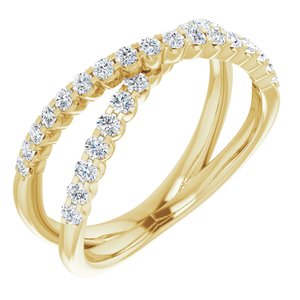
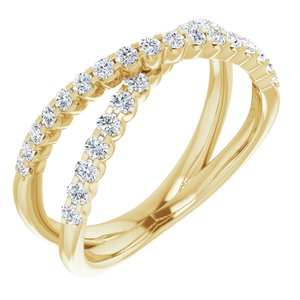
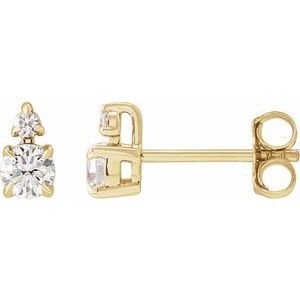
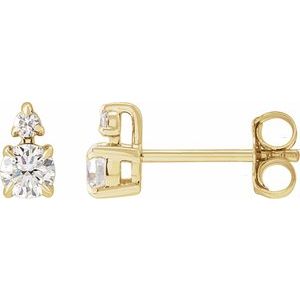
You can browse our diamond rings or diamond earrings. If you want a second opinion on a stone or report, contact Promise Jewelry before you order.


